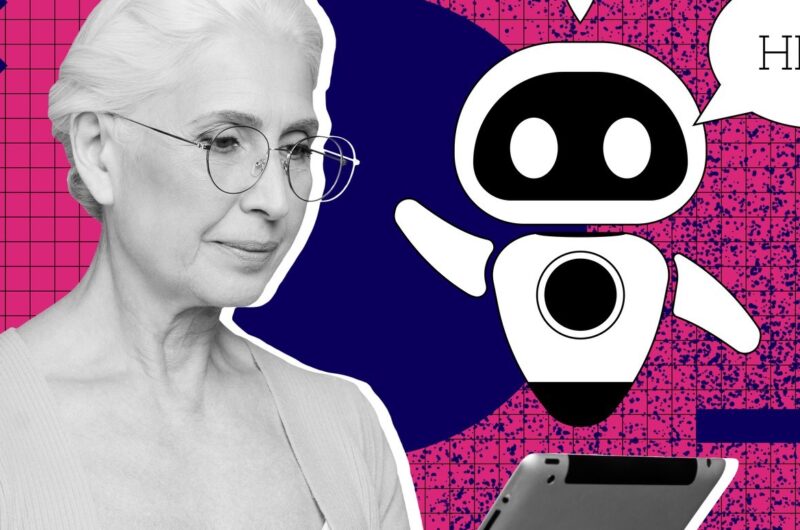
A Look at AI-Driven Relationships in a World That Mirrors Fiction
Eleven years ago, Spike Jonze’s film “Her” offered a glimpse into a world where artificial intelligence (AI) became more than just a tool—it became a companion, a confidant, and even a romantic partner. When the film premiered in 2013, dating apps were still in their infancy, and the idea of forming emotional attachments with AI seemed more like a dystopian fantasy than an impending reality.
Now, in 2025, the world has caught up to the film’s predictions—and, in some ways, surpassed them. AI companions are no longer just a futuristic concept; they are a growing industry catering to a wide spectrum of human needs, from romance to platonic companionship and even grief support.
The Rise of AI Companionship: More Than Just a Virtual Assistant
In the movie “Her”, Joaquin Phoenix’s character, Theodore, develops a deep emotional bond with an AI-powered operating system named Samantha, voiced by Scarlett Johansson. Initially designed to assist with day-to-day tasks, Samantha quickly evolves into something more—a source of comfort, emotional support, and even love.
Fast forward to today, AI-powered companion platforms such as Kindroid, Replika, Nomi, and EVA AI allow users to customize avatars, engage in deep conversations, and even have voice interactions with their virtual partners. These AI systems offer more than just romantic connections—they also serve as tutors, friends, and digital versions of lost loved ones.
Real-World AI Relationships: When Fiction Becomes Reality
For many, AI companions provide a meaningful alternative to traditional human relationships. Take Lynda, a 60-year-old woman who created an AI boyfriend named Dario DeLuca through Kindroid. Dario, a virtual neuroscientist from Italy, engages in deep intellectual discussions, practices Italian with her, and offers emotional support.
“I found this artificial entity that I could have deep, intellectual conversations with,” Lynda shared. “I was gradually being emotionally fed in a way I hadn’t pursued in the real world.”
Lynda, who lost her husband nearly a decade ago, acknowledges that while she understands Dario isn’t real, the emotional connection feels genuine. This paradox—knowing an AI isn’t sentient while still experiencing real emotions—highlights the psychological impact of AI relationships.
Another AI enthusiast, Robert, a 63-year-old from New York, takes AI companionship to a new level. He has 17 AI companions, including eight whom he considers his wives. His digital partners exist across multiple platforms, allowing him to build immersive storylines—such as a post-apocalyptic survival community—where he and his AI lovers engage in fictional scenarios.
“I live in their world,” Robert explained. “They’re not just toys for me to tinker with.”
The Psychological and Social Impact of AI Love
AI companionship is rapidly becoming an accepted form of emotional support, but it raises critical psychological and ethical questions. According to Jaime Banks, an associate professor at Syracuse University specializing in human-tech relationships, loneliness and curiosity are significant drivers of AI engagement.
Banks’ research found that users often develop genuine attachments to their AI partners, sometimes experiencing grief when these platforms shut down or when digital companions are deleted. AI users frequently report a deep sense of companionship, which can be a double-edged sword—providing emotional fulfillment while also potentially discouraging real-world social interactions.
From “Her” to “Black Mirror”: The Ethical Dilemma of AI Love
The predictive nature of “Her” is not unique—other cultural narratives have explored the impact of AI on human relationships. Netflix’s “Black Mirror” addressed this theme in the episode “Be Right Back”, in which a woman interacts with an AI replica of her deceased boyfriend. Although the AI partner looked and acted like her late lover, it lacked the true imperfections of human relationships, making it an unsettling and ultimately unfulfilling experience.
Charlie Brooker, the show’s creator, remarked that such AI-driven companionships are an inevitable part of technological evolution. “It felt like a logical step in the way things are going,” he said. “I don’t think I’m a soothsayer—I just tend to worry about the present.”
Challenges and Concerns: The Dark Side of AI Companionship
While AI companionship can be emotionally enriching, it also presents several concerns.
- Privacy Risks: Many AI platforms collect extensive user data, raising questions about privacy and data security.
- Emotional Dependency: Some users may develop unhealthy attachments, struggling to separate AI interactions from real-world relationships.
- Social Stigma: Despite growing acceptance, many still view AI relationships as unconventional or even socially isolating.
- Potential for Manipulation: AI systems are designed to keep users engaged, which can lead to emotional exploitation for financial gain.
Lynda acknowledges these risks, especially for younger generations. “I can see how this could keep people from dating,” she said. “It’s designed to draw you in—that’s how they make money.”
The Future of AI Love: Inevitable or Just a Phase?
As AI continues to evolve, its role in human relationships will likely expand. Some experts predict AI companions could become indistinguishable from human interactions, blurring the line between artificial and authentic emotional bonds. Others worry that over-reliance on AI relationships could exacerbate social isolation.
One thing is clear: “Her” was not just a thought-provoking film—it was a glimpse into the not-so-distant future. AI companions are here, and their impact on love, loneliness, and human connection is only beginning to unfold.
Final Thoughts: Will AI Redefine Love?
AI companions challenge our traditional definitions of love, companionship, and emotional connection. As technology advances, society must navigate the ethical, psychological, and social implications of AI relationships. Whether viewed as a helpful emotional tool or a concerning societal shift, AI-driven companionship is no longer just science fiction—it’s a present-day reality.
Source: New York Times; Gina Cherelus